
How Not to Overpay for Steel: Weight, Tolerances and Inspection at Delivery
08.07.2026
Steel is sold by weight, and weight depends directly on the dimensions of the product, which do not always match what is declared. A tube wall a few tenths of a millimetre thinner, a rebar diameter slightly under nominal, and across a full batch this turns into dozens of kilograms you paid for but never received. Below we look at what makes up the real price of steel, where underweight hides and how to inspect a delivery.
What the real price of steel is made of
The cost of a batch is the price per tonne multiplied by the weight. Buyers compare the price per tonne easily, but take the weight on trust. Yet the weight is exactly where the catch lies: if the actual dimensions are below nominal, there is physically less steel in a tonne, while you pay for the declared weight. So comparing suppliers on price per tonne alone is not enough; dimensional accuracy matters just as much.
Theoretical and actual weight
Weight calculated from nominal dimensions is called theoretical. Real rolled steel always differs slightly from the ideal, and European standards allow this by setting tolerance limits. The trouble begins where the deviation runs systematically below nominal: formally, a batch may stay within tolerance or nearly so, yet the buyer keeps receiving slightly less steel than was paid for.
Where underweight occurs most often
Tube wall thickness
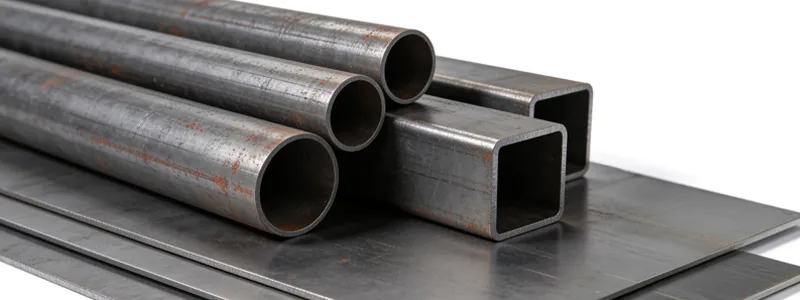
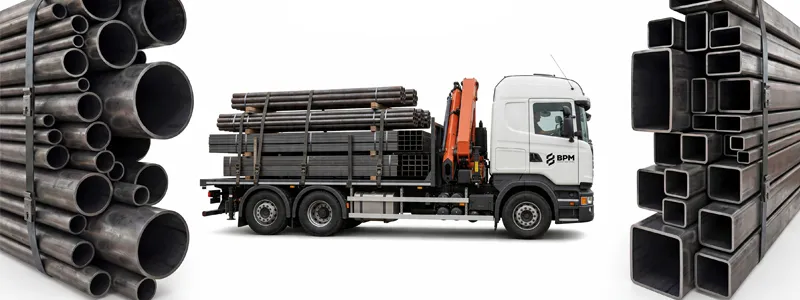
With square, rectangular and round tube, weight is highly sensitive to wall thickness. A wall a few tenths of a millimetre below nominal is invisible to the eye, yet on tonnes it becomes a tangible shortfall. Dimensional tolerances for tube are set by EN 10219 and EN 10210, and a control measurement of the wall with calipers or a micrometer shows the difference immediately.
Rebar diameter and profile
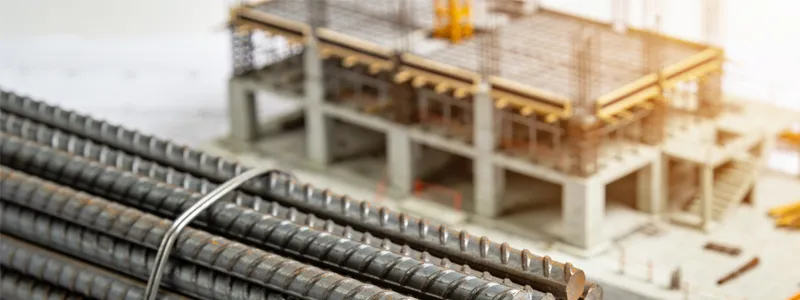
The same logic applies to rebar. A slightly smaller diameter means a lower weight per linear metre. One important detail: the diameter of ribbed rebar is measured on the body of the bar, not across the ribs, otherwise the reading will come out inflated. The steel is produced to EN 10080 in grades B500B and B500C.
How to check steel at delivery
Measuring and weighing
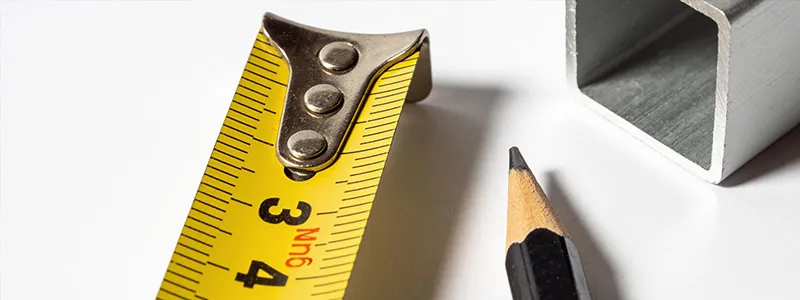
The most reliable approach is to weigh the batch and check the key dimensions with calibrated instruments: a micrometer for thickness and diameter, calipers for cross-sections. A reliable supplier has nothing to fear from such a check. BPM offices keep calibrated micrometers, and dimensions can be measured right at dispatch, including for steel bought elsewhere. Incidentally, with BPM's own rolled steel the deviation most often falls on length and works in the client's favour: a bar with a nominal length of 12 metres may in fact measure between 12.01 and 12.08 metres.
What should be in the documents
Dimensions should be checked against the batch documentation. For rebar this is the Technical Assessment (Evaluare tehnică), which suppliers renew annually and which confirms compliance with EN 10080 and grade B500B or B500C. Without this document there is no guarantee that you are looking at the declared grade and steel.
The bottom line is simple. Price per tonne is half the picture. Real value is determined by actual dimensions and honest weight, and the check takes five minutes with a calibrated instrument and the paperwork. A supplier who calmly lets you measure everything ends up cheaper than the one with a lower figure on the price tag.


