
Angle
| Name | Size W/H/T | Length | Weight | Cart |
|---|---|---|---|---|
| Angle | 100×100×10 mm | 12 m | 180 |
|
| Angle | 100×100×7 mm | 12 m | 129,12 |
|
| Angle | 100×100×8 mm | 12 m | 147 |
|
| Angle | 125×125×8 mm | 12 m | 185,52 |
|
| Angle | 20×20×3 mm | 6 m | 5,286 |
|
| Angle | 25×25×3 mm | 6 m | 7,47 |
|
| Angle | 30×30×3 mm | 6 m | 8,76 |
|
| Angle | 32×32×3 mm | 6 m | 9,48 |
|
| Angle | 35×35×3 mm | 6 m | 10,2 |
|
| Angle | 40×40×3 mm | 6 m | 11,7 |
|
| Angle | 40×40×4 mm | 6 m | 15,42 |
|
| Name | Size W/H/T | Length | Weight | Cart |
|---|---|---|---|---|
| Angle | 45×45×4 mm | 6 m | 16,578 |
|
| Angle | 50×50×4 mm | 6 m | 20,4 |
|
| Angle | 50×50×5 mm | 6 m | 23,1 |
|
| Angle | 63×63×5 mm | 12 m | 59,22 |
|
| Angle | 63×63×6 mm | 12 m | 68,64 |
|
| Angle | 75×75×5 mm | 12 m | 69,888 |
|
| Angle | 75×75×6 mm | 12 m | 84 |
|
| Angle | 80×80×6 mm | 12 m | 88,32 |
|
| Angle | 90×90×6 mm | 12 m | 100,8 |
|
| Angle | 90×90×7 mm | 12 m | 115,62 |
|
| Angle | 90×90×8 mm | 12 m | 130,8 |
|
| Name | Size W/H/T | Length | Weight | Cart |
|---|---|---|---|---|
| Angle | 100×100×10 mm | 12 m | 180 |
|
| Angle | 100×100×7 mm | 12 m | 129,12 |
|
| Angle | 100×100×8 mm | 12 m | 147 |
|
| Angle | 125×125×8 mm | 12 m | 185,52 |
|
| Angle | 20×20×3 mm | 6 m | 5,286 |
|
| Angle | 25×25×3 mm | 6 m | 7,47 |
|
| Angle | 30×30×3 mm | 6 m | 8,76 |
|
| Angle | 32×32×3 mm | 6 m | 9,48 |
|
| Angle | 35×35×3 mm | 6 m | 10,2 |
|
| Angle | 40×40×3 mm | 6 m | 11,7 |
|
| Angle | 40×40×4 mm | 6 m | 15,42 |
|
| Angle | 45×45×4 mm | 6 m | 16,578 |
|
| Angle | 50×50×4 mm | 6 m | 20,4 |
|
| Angle | 50×50×5 mm | 6 m | 23,1 |
|
| Angle | 63×63×5 mm | 12 m | 59,22 |
|
| Angle | 63×63×6 mm | 12 m | 68,64 |
|
| Angle | 75×75×5 mm | 12 m | 69,888 |
|
| Angle | 75×75×6 mm | 12 m | 84 |
|
| Angle | 80×80×6 mm | 12 m | 88,32 |
|
| Angle | 90×90×6 mm | 12 m | 100,8 |
|
| Angle | 90×90×7 mm | 12 m | 115,62 |
|
| Angle | 90×90×8 mm | 12 m | 130,8 |
|
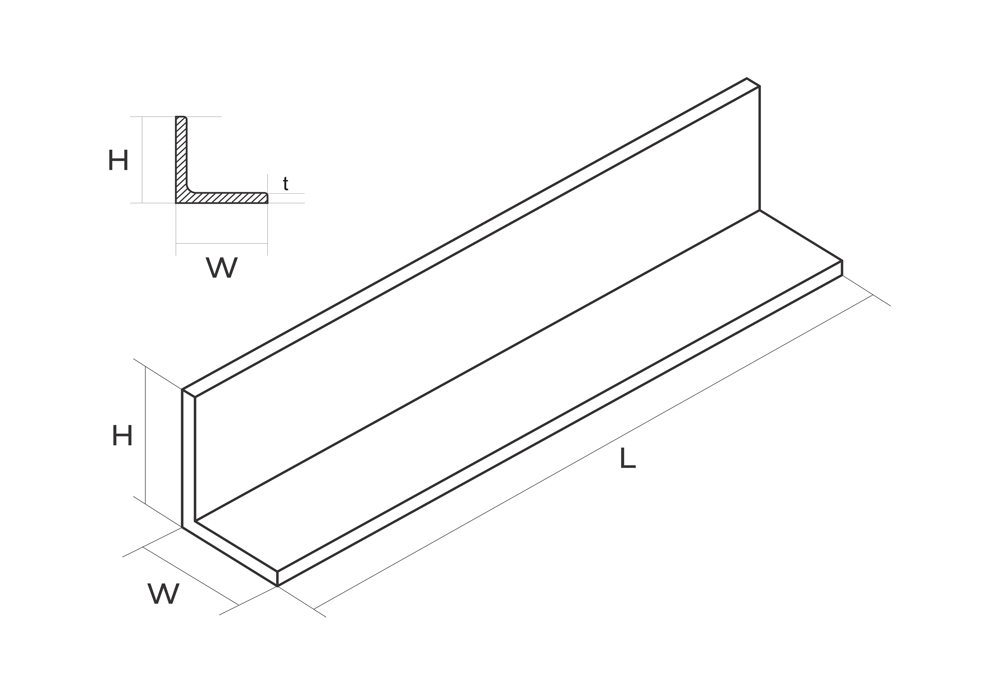
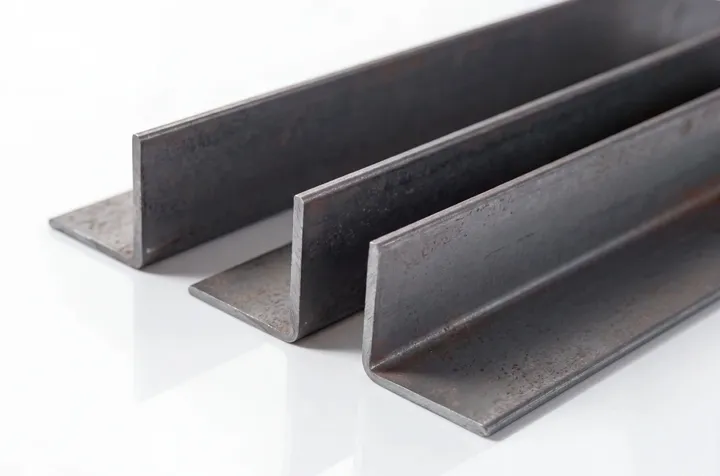
Angle bar - is a rolled product with an L-shaped cross-section. Its range of application is wide - from furniture production to the automotive industry. It is also widely used in monolithic construction, where angle bar serves as rigid reinforcement for concrete, and for floors subjected to high loads. The main advantage of angle bar is its low weight and high degree of bending resistance.
Angle bar is classified by production method and cross-section type.
By production method:
Hot-rolled — the steel billet passes through rolls to form the required product dimensions, then passes through a rolling mill under pressure. In terms of strength, hot-rolled angle bar ranks first among steel angles and is used in the joints of load-bearing structures where high material stresses are expected.
Bent - manufactured on press brakes. The raw material is sheet steel (hot-rolled or cold-rolled), which is bent to achieve the desired shape. Bent angle bar cannot be used in load-bearing structures. Its advantages are low weight and ease of installation, while its disadvantage is lower strength, which prevents its use in critical structures.
By cross-section:
Equal leg angle bar
Used in construction, furniture component manufacturing, and various structures where a right angle is required.
Areas of application of equal leg angle bar:
reinforcement of load-bearing elements of various types of structures;
installation of lattice technological complexes (trusses): construction of tower cranes, viaducts, long bridges, etc.;
concrete reinforcement, installation of frames for monolithic buildings and other structures;
for composite I-beam profiles.
Unequal leg angle bar
Has found application in more complex structures such as arches. It has a narrower, more specialized area of application compared to equal leg angle bar. At the same time, the cross-section characteristics allow the construction of highly complex structures.
Unequal leg angle bar is used:
to reinforce metal structures where equal leg angle bar is not geometrically suitable, for the installation of lattice structures and single compressed angle bar elements;
for creating decorative structures with high load-bearing capacity: arches, openings with complex configurations;
in the automotive and railway industries, production of specialized and road machinery, sea and river vessels.
Payment options:
online by bank card;
bank transfer to current account;
cash.
Delivery is carried out:
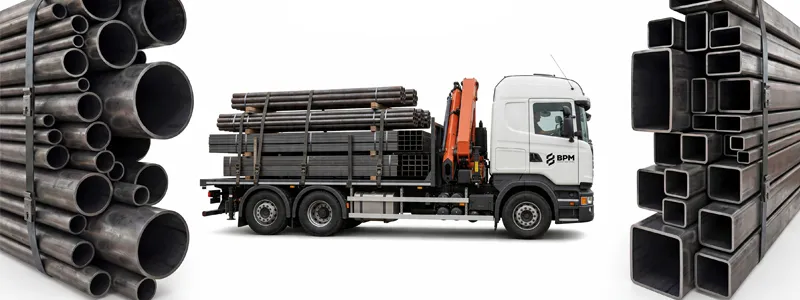
by BPM Cement and Steel's own transport service;
to all regions of the Republic of Moldova.
BPM Cement and Steel offers:
quality products from major rolled metal manufacturers;
a wide range of rolled metal products in various sizes;
highly qualified personnel;
fast order completion and delivery to address, or pickup at the warehouse;
individual approach and negotiable discounts.
1. Which type of angle steel is used most often: equal or unequal angle?
In more than 90% of cases, equal angle steel is used, where both sides have the same dimensions, for example 50×50, 75×75 or 100×100 mm. Unequal angles, such as 100×70 or 60×35 mm, are used less frequently in Moldova.
2. Which angle thickness should be selected?
The thickness may range from 2 to 10 mm, depending on the profile size and the expected load. Where no precise structural calculation is available, it is safer to choose the next thicker option.
3. Which angle steel is suitable for shelving or racks?
Angles in sizes 30, 40 and 45 mm are commonly used for shelving, storage racks, household structures and general construction work. The thickness should be selected according to the expected load.
4. Can a 40×40×3 mm angle support a loaded shelf?
It is not suitable for heavy loads. For example, a 4-metre rack made from 40×40×3 mm angle steel and carrying a load of 400–500 kg may sag. A greater thickness or a shorter span is required.
5. Which angle steel is suitable for industrial structures?
For industrial applications, angles of 50 mm and above are generally used, including in load-bearing structures and lift shafts. Less common sizes, such as 150×150 mm with a wall thickness of 10–12 mm for complex structural joints, can be supplied to order within a short lead time.


