
I-beam
| Name | Size | Length | Weight | Cart |
|---|---|---|---|---|
| IPE I-Beam | IPE 100 mm | 12,1 m | 98,01 |
|
| IPE I-Beam | IPE 120 mm | 12,1 m | 126,36 |
|
| IPE I-Beam | IPE 140 mm | 12,1 m | 156,735 |
|
| IPE I-Beam | IPE 160 mm | 12,1 m | 191,18 |
|
| IPE I-Beam | IPE 180 mm | 12,1 m | 227,48 |
|
| IPE I-Beam | IPE 200 mm | 12,1 m | 271,04 |
|
| IPE I-Beam | IPE 220 mm | 12,1 m | 317,02 |
|
| IPE I-Beam | IPE 240 mm | 12,1 m | 371,47 |
|
| IPE I-Beam | IPE 270 mm | 12,1 m | 436,81 |
|
| IPE I-Beam | IPE 300 mm | 12,1 m | 510,62 |
|
| IPE I-Beam | IPE 330 mm | 12,1 m | 594,11 |
|
| IPE I-Beam | IPE 360 mm | 12,1 m | 690,91 |
|
| Name | Size | Length | Weight | Cart |
|---|---|---|---|---|
| IPE I-Beam | IPE 100 mm | 12,1 m | 98,01 |
|
| IPE I-Beam | IPE 120 mm | 12,1 m | 126,36 |
|
| IPE I-Beam | IPE 140 mm | 12,1 m | 156,735 |
|
| IPE I-Beam | IPE 160 mm | 12,1 m | 191,18 |
|
| IPE I-Beam | IPE 180 mm | 12,1 m | 227,48 |
|
| IPE I-Beam | IPE 200 mm | 12,1 m | 271,04 |
|
| IPE I-Beam | IPE 220 mm | 12,1 m | 317,02 |
|
| IPE I-Beam | IPE 240 mm | 12,1 m | 371,47 |
|
| IPE I-Beam | IPE 270 mm | 12,1 m | 436,81 |
|
| IPE I-Beam | IPE 300 mm | 12,1 m | 510,62 |
|
| IPE I-Beam | IPE 330 mm | 12,1 m | 594,11 |
|
| IPE I-Beam | IPE 360 mm | 12,1 m | 690,91 |
|
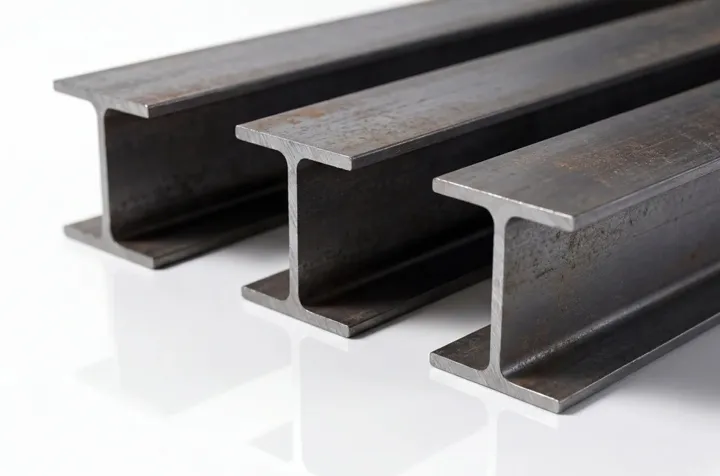
The I-beam is one of the most sought-after products in the rolled metal range, widely used in modern construction due to its optimal strength-to-weight ratio. Its characteristic cross-sectional shape ensures maximum bending rigidity and high load-bearing capacity, making it indispensable in large-scale construction projects.
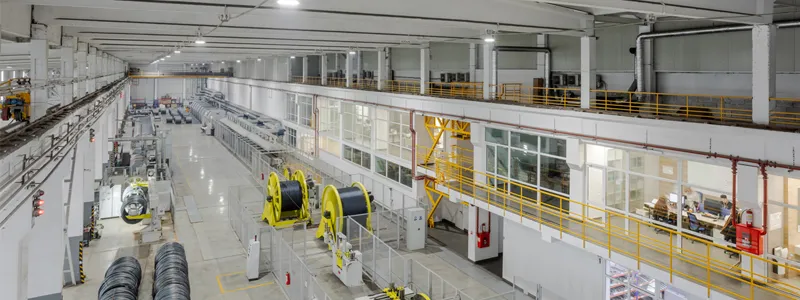
I-beams are manufactured by hot rolling on specialized equipment by drawing heated metal through profile dies. This process ensures homogeneity of the internal steel structure and high mechanical properties of the finished product.
Main areas of application of I-beam:
construction of industrial, civil and residential buildings;
floor beams and roof structural elements;
bridge and overpass construction;
manufacturing of cranes and industrial equipment support structures;
metal frame and load-bearing structure construction;
deep foundation and retaining wall construction.
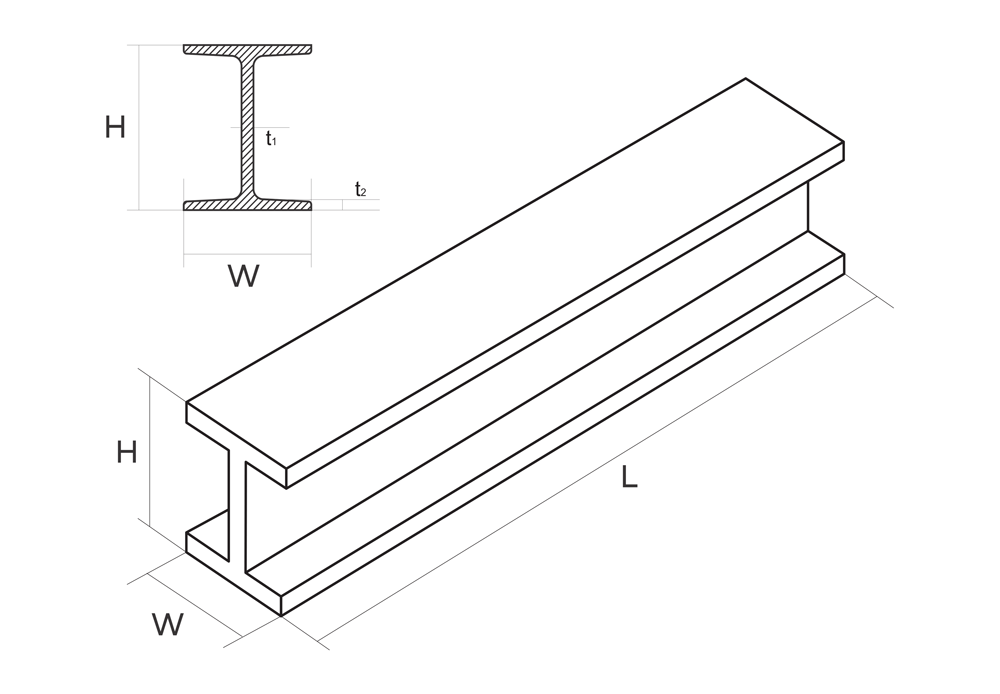
The main parameters characterizing the properties of I-beam are: profile height, flange width and thickness, web thickness, cross-sectional area, moment of inertia, and section modulus. The height of the I-beam determines its nominal number and area of application.
By flange type, I-beams are divided into:
Parallel flange I-beam (Type B)
Characterized by parallel flange faces, which facilitates connection with other structural elements and simplifies installation. It is the most widely used type in modern construction.Tapered flange I-beam (Type A)
Characterized by a slight inward inclination of the flanges. Used in traditional construction and in applications where increased joint rigidity is required.
Payment options:
online by bank card;
bank transfer to current account;
cash.
Delivery is carried out:
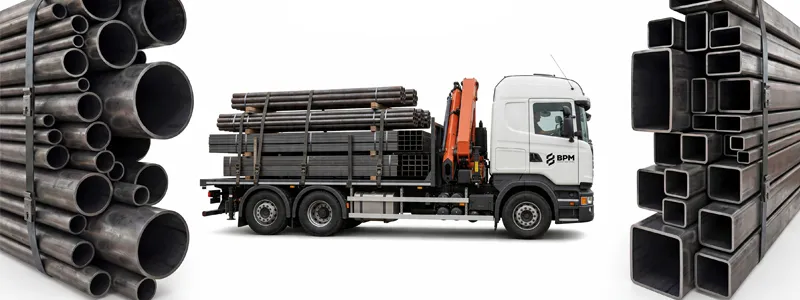
by BPM Cement and Steel's own transport service;
to all regions of the Republic of Moldova.
BPM Cement and Steel offers:
quality products from major rolled metal manufacturers;
a wide range of rolled metal products in various sizes;
highly qualified personnel;
fast order completion and delivery to address, or pickup from metal centers;
individual approach and negotiable discounts.
1. What is the difference between an I-beam and a channel section, and when should an I-beam be used?
An I-beam has an H-shaped cross-section and provides more surfaces for connecting trusses, pipes and structural joints. This makes it more convenient for complex structures. A channel section is more limited in this respect.
2. What types of I-beams are available?
The most commonly used profiles are IPE beams, as well as HEA and HEB sections. They differ in dimensions, flange thickness, intended application and design load capacity.
3. Which beam is suitable for a large span without columns?
Heavy HEA, HEB and IPE beams are used for this purpose. They can span more than 16–20 metres without intermediate columns. The largest span completed in Moldova using beams supplied by BPM exceeds 30 metres.
4. Are I-beams supplied in 12-metre lengths?
It depends on the manufacturer. Turkish and European mills often produce beams in lengths of 12.10 or 12.15 metres, leaving an allowance for cutting. Orders should therefore be calculated using the actual length: four beams do not equal exactly 48 metres, but approximately 48.90 metres.
5. Why is the actual beam weight higher than expected?
Because the actual length is greater than the nominal length due to the cutting allowance. The weight is calculated based on the actual dimensions when the material is received. During cutting, approximately 5–6 cm may remain as production offcut.


