
Wire
| Name | Diameter | Weight | Cart |
|---|---|---|---|
| Galvanized Wire | Ø 1.5 | — |
|
| Galvanized Wire | Ø 1.7 | — |
|
| Galvanized Wire | Ø 1.9 | — |
|
| Galvanized Wire | Ø 2.2 | — |
|
| Galvanized Wire | Ø 2.4 | — |
|
| Galvanized Wire | Ø 2.5 | — |
|
| Heat-Treated Wire | Ø 1.2 | — |
|
| Heat-Treated Wire | Ø 3.0 | — |
|
| Heat-Treated Wire | Ø 4.0 | — |
|
| Name | Diameter | Weight | Cart |
|---|---|---|---|
| Galvanized Wire | Ø 1.5 | — |
|
| Galvanized Wire | Ø 1.7 | — |
|
| Galvanized Wire | Ø 1.9 | — |
|
| Galvanized Wire | Ø 2.2 | — |
|
| Galvanized Wire | Ø 2.4 | — |
|
| Galvanized Wire | Ø 2.5 | — |
|
| Heat-Treated Wire | Ø 1.2 | — |
|
| Heat-Treated Wire | Ø 3.0 | — |
|
| Heat-Treated Wire | Ø 4.0 | — |
|
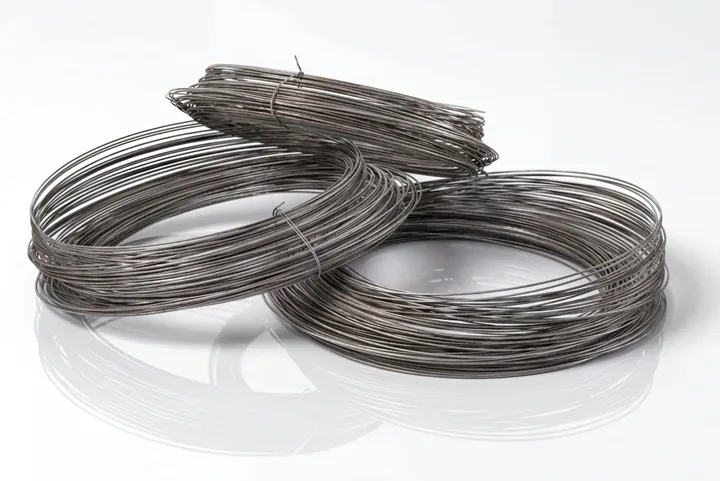
Wire is a type of rolled metal product representing a metal strand, usually of circular cross-section. It is typically produced from steel, copper, aluminum, nichrome, and various alloys.
The predominant part of industrially produced wire is used as a semi-finished product for obtaining other items. A small share of it is used as a binding material — wire is used to tie reinforcement in concrete work, to close bags, etc.
The most widely used wire is steel wire. Various steel grades are used to produce it. Spring steel grades are used to make wire for the manufacture of meshes, springs, and certain specialized cables.
Softer steel grades are used to make wire for nails, self-tapping screws, and bolts.
Several groups of wire are made from steel:
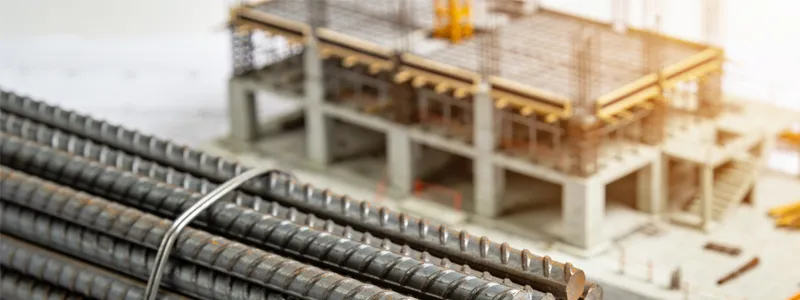
Reinforcement wire - cold-drawn steel wire made from low-carbon steel with a periodic profile, class VR-1. It is used in monolithic reinforcement, the creation of reinforced concrete structures and foundations. It has special notches on the rod, which promotes improved bonding of the wire with cement mortar and concrete mixes. To reinforce concrete with wire, the manufacture of frame structures or mesh with cells is required.
Binding wire - not very suitable for producing any products from it, yet its qualities allow use in various applications. Binding wire is used to tie steel reinforcement when working with concrete. It bends excellently and is easily cut with wire cutters or pliers. Binding wire is used to attach mesh to posts and can also be used as a repair material.
Grade wire - made from structural carbon steel. Grade wire is used to manufacture consumer goods and is also used in instrument manufacturing.
Cold heading wire - used in industrial production for manufacturing products by the cold heading method.
Rope wire - used in the manufacture of ropes. By surface type, rope wire can be galvanized or uncoated.
Telegraph wire - used in the installation of all types of wired communication: telegraph, telephone, and others. Produced by the drawing method, by pulling through rolls. A zinc or copper coating is applied to the surface. Telegraph wire can also be uncoated - black.
Welding wire, used for various types of welding: automatic, mechanized, and manual, as well as for the manufacture of electrodes and surfacing work.
Each type of wire has a number of characteristics that make it ideal for use in specific purposes. For example, cold heading steel wire can be processed by cold heading, while other types are completely incompatible with such equipment.
Payment options:
online by bank card;
bank transfer to current account;
cash.
Delivery is carried out:
by BPM Cement and Steel's own transport service;
to all regions of the Republic of Moldova.
BPM Cement and Steel offers:
quality products from major rolled metal manufacturers;
best price on the market;
a wide range of rolled metal products in various sizes;
highly qualified personnel;
fast order completion and delivery to address, or pickup from metal centers;
individual approach and negotiable discounts.
1. What is binding wire used for?
Binding wire is used to secure reinforcement cages. It keeps the reinforcing bars in place so that they do not shift during concrete pouring and helps maintain an even concrete cover.
2. What does “annealed” wire mean?
Annealed wire is heat-treated in furnaces at temperatures of approximately 800–1000°C. After annealing, it loses its rigidity and becomes highly flexible, making it easy to use for tying, almost like thread.
3. Which wire diameters are most commonly used?
The most common diameters are 1.2 and 3 mm, while 1.4 and 4 mm are used less frequently. The thickness is selected according to the diameter of the reinforcing bars and the project requirements. For example, 3 mm wire is used for tying more rigid foundation reinforcement cages.
4. Is the wire sold by length or by weight?
The wire is sold by weight, in kilograms. As a reference, one metre of 1.2 mm wire weighs approximately 8.9 grams, which means that 100 kg contains around 11 kilometres of wire. Coils usually weigh between 50 and 130 kg.
5. What other types of wire are available besides binding wire?
Hot-dip galvanized wire is also available for gardening, vineyards and agricultural use, as it is resistant to moisture. Spring wire is also available for manufacturing springs used in upholstered furniture, although this is a more specialised segment.


